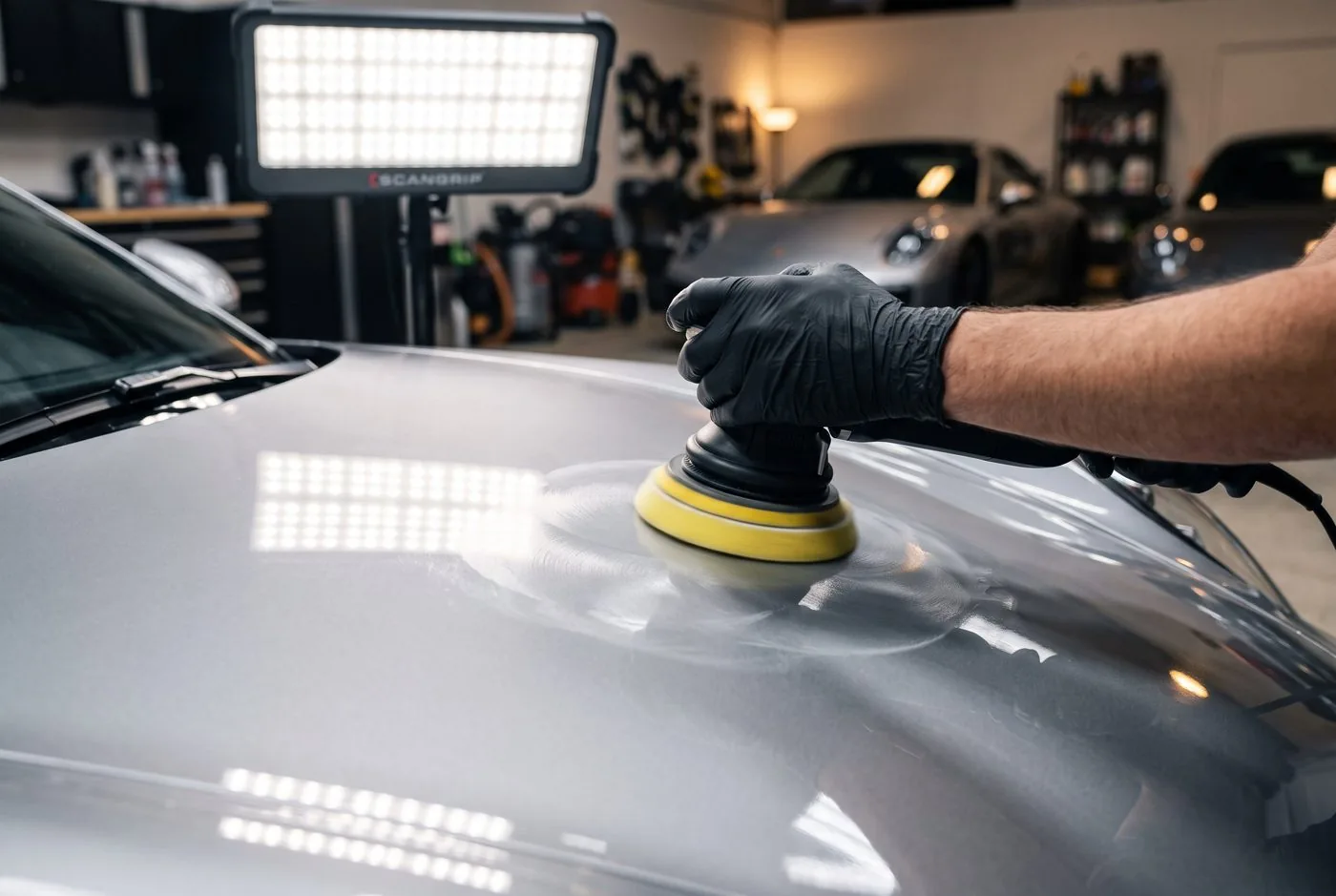
Paint correction in Dallas, TX
Machine polishing to reduce swirl marks and light defects and bring back paint clarity — with honest expectations about what correction can and can't do.
What is paint correction?
Paint correction is a machine polishing process that removes a microscopically thin layer of clear coat to level out surface imperfections — swirl marks, light scratches, water spots, and oxidation — restoring clarity and gloss without repainting the vehicle.
Swirl marks vs. scratches
Swirl marks are fine, circular scratches caused by improper wash technique — dirty wash mitts, automated brush washes, or wiping dust off with a dry towel. They're shallow and sit within the clear coat, which is exactly what correction is built to address. Deeper scratches that penetrate to the base coat or metal are a different problem; correction can sometimes soften their appearance but won't fully remove them.
What paint correction can remove
- Swirl marks and fine wash-induced scratching
- Light oxidation and clouding
- Water spot etching (in most cases)
- Minor holograms left by improper prior polishing
What paint correction cannot fix
- Deep scratches reaching the base coat or bare metal
- Dents, creases, or impact damage
- Clear coat failure (peeling or cracking) — this needs repainting
- Paint that's already been over-thinned by aggressive prior polishing
One-step vs. multi-stage correction
A one-step correction uses a single polishing pass and is suited to paint with light-to-moderate defects. Multi-stage correction — compounding, then polishing, sometimes finishing — addresses heavier defects but removes more clear coat in the process, so it's not something to repeat indefinitely on the same vehicle.
Paint correction before ceramic coating
Ceramic coating locks in whatever the paint looks like underneath it. Correcting swirl marks and defects first, then coating, is the standard sequence for the best long-term finish — coating over uncorrected paint just protects the flaws along with everything else. Read the paint correction vs. ceramic coating guide before requesting both services.
Paint correction questions
Light surface scratches and swirl marks within the clear coat, yes. Deep scratches reaching the base coat or metal typically need touch-up paint or bodywork.
Fine circular scratches in the clear coat, usually from improper washing or drying — most visible under direct sun or LED inspection lighting.
Not strictly required, but strongly recommended — coating locks in whatever's underneath, so correcting first gives the better long-term result.
Restore your paint's clarity
Tell us about your vehicle's condition and we'll recommend the right level of correction.
Useful next steps
What to include in a Dallas paint correction request
Send your vehicle’s make, model, year, paint history if known, and clear photographs of the defects. Explain the finish you want and whether you are considering a coating. Ask the provider to inspect the paint, agree on a test spot, and identify marks that should remain.
Compare one-step and two-step correction by the inspected result, then use our paint correction quote checklist. Availability, final price, and scope come from the performing provider.