Ceramic coating in Dallas, TX
A durable, hydrophobic layer that supports gloss retention and easier washing — and honestly explained limitations, so you know exactly what you're paying for.
What is ceramic coating?
Ceramic coating is a liquid polymer, most often based on silicon dioxide (SiO2), that's applied by hand and chemically bonds to a vehicle's clear coat. Once cured, it forms a thin, hard, hydrophobic layer on top of the paint — distinct from wax or sealant, which sit on the surface and break down within weeks to a few months.
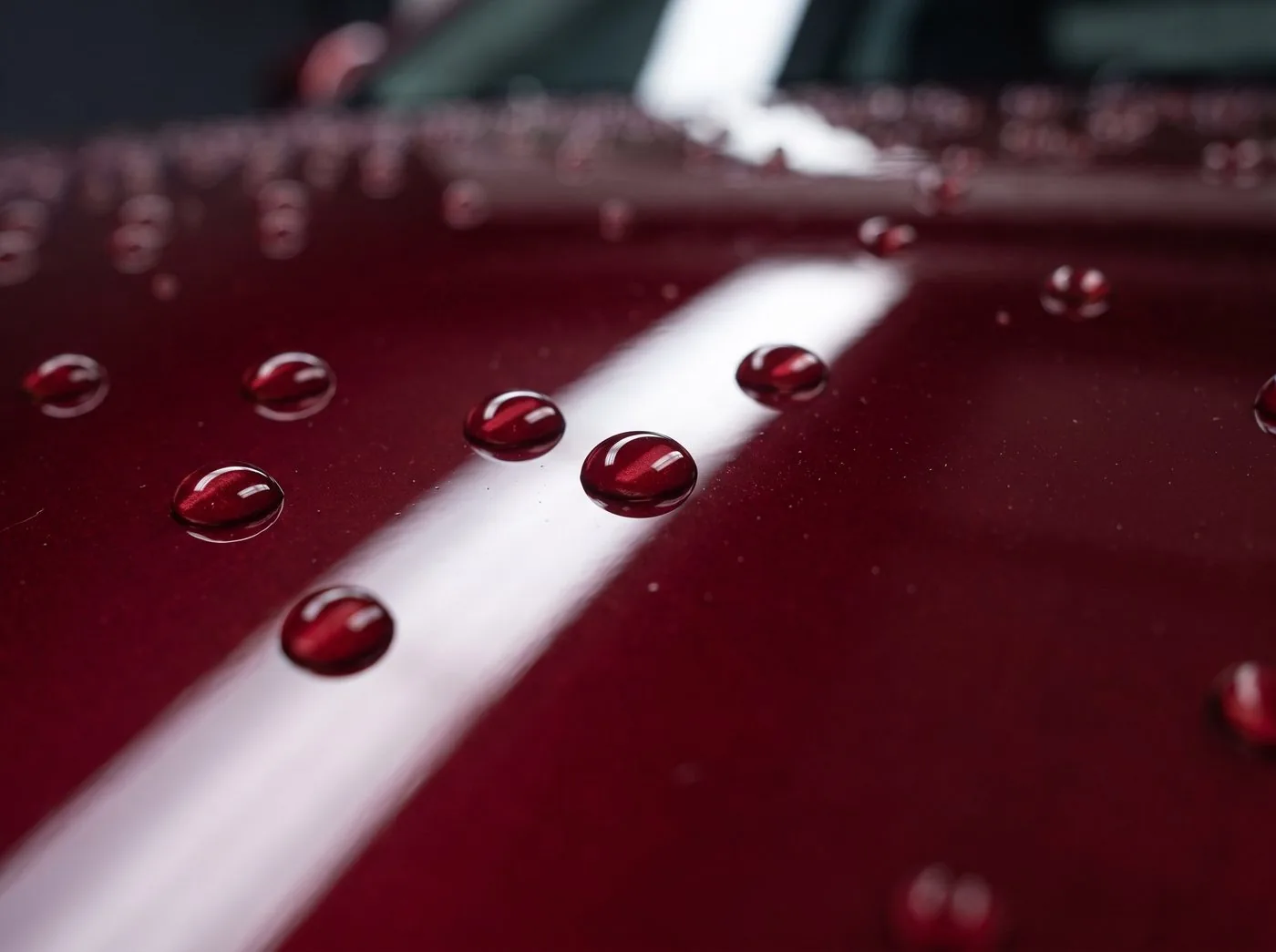
The bonded layer changes how the paint interacts with water, dirt, and UV light: water beads and rolls off rather than sheeting, and contaminants have a harder time gripping the surface.
What ceramic coating actually does
- UV resistance: Helps slow oxidation and fading from constant sun exposure — relevant given Dallas summer UV index readings that regularly reach the "very high" to "extreme" range.
- Hydrophobic beading: Water beads and sheets off instead of sitting on the paint, which reduces water spotting and makes rinsing more effective.
- Easier maintenance washing: Dirt and light grime release more easily, so routine washes take less scrubbing and are gentler on the clear coat over time.
- Chemical resistance: Adds a buffer against everyday contaminants like bird droppings, tree sap, and bug splatter, giving you more time to clean them off before they etch in.
What ceramic coating does not do
This is the part most marketing skips. Ceramic coating is a thin, hard film — not a rubber or urethane layer. It will not:
- Prevent rock chips, key scratches, or door dings
- Fix existing swirl marks or paint defects (that's what paint correction is for, usually done before coating)
- Eliminate the need for washing — coated paint still collects dirt and pollen, it just releases it more easily
- Make paint "scratch-proof," despite how that phrase gets used in marketing
If impact and scratch resistance are the priority, paint protection film (PPF) is the correct product — often used alongside ceramic coating rather than instead of it.
Ceramic coating vs. wax vs. sealant
| Wax | Sealant | Ceramic Coating | |
|---|---|---|---|
| Typical lifespan | 4–8 weeks | 3–6 months | 1–5+ years |
| Bonds to clear coat | No | Partial | Yes |
| UV protection | Minimal | Moderate | Strong |
| Scratch resistance | None | None | None (see PPF) |
| Upfront cost | Low | Low–moderate | Higher |
Lifespans vary by product line, prep quality, and maintenance — treat these as general ranges, not guarantees.
Why Dallas heat and UV make coating worth considering
North Texas doesn't just get hot — it gets sustained, high-UV heat for months at a time, which is genuinely tougher on exposed paint than milder climates.
Extended UV exposure
Dallas summer UV index commonly reaches 9–11 (Very High to Extreme), well above levels considered mild.
Sustained high heat
If your vehicle is parked outdoors, discuss the actual exposure, wash routine, and desired upkeep before choosing a protection product. Ask the provider what the selected coating is specified to do and what it cannot prevent.
Storms & pollen cycles
Spring pollen and sudden thunderstorms both leave residue that a hydrophobic surface sheds more easily than bare clear coat.
Ceramic coating questions
It creates a hydrophobic layer that resists UV fading, light chemical staining, and everyday contaminants, while making the surface easier to rinse clean.
No. It's a thin, hard layer, not a physical shield — it won't stop rock chips, key scratches, or deep swirl marks. Paint protection film is built for that job.
Two-bucket hand wash with pH-neutral soap, avoid automated brush washes, and dry with clean microfiber. Coating makes washing easier, but doesn't remove the need for it.
For vehicles parked outside through Dallas summers, it can meaningfully cut down UV exposure and contamination buildup between washes — many daily drivers find that worthwhile.
Ready to protect your paint?
Tell us about your vehicle and we'll match you with a ceramic coating quote.